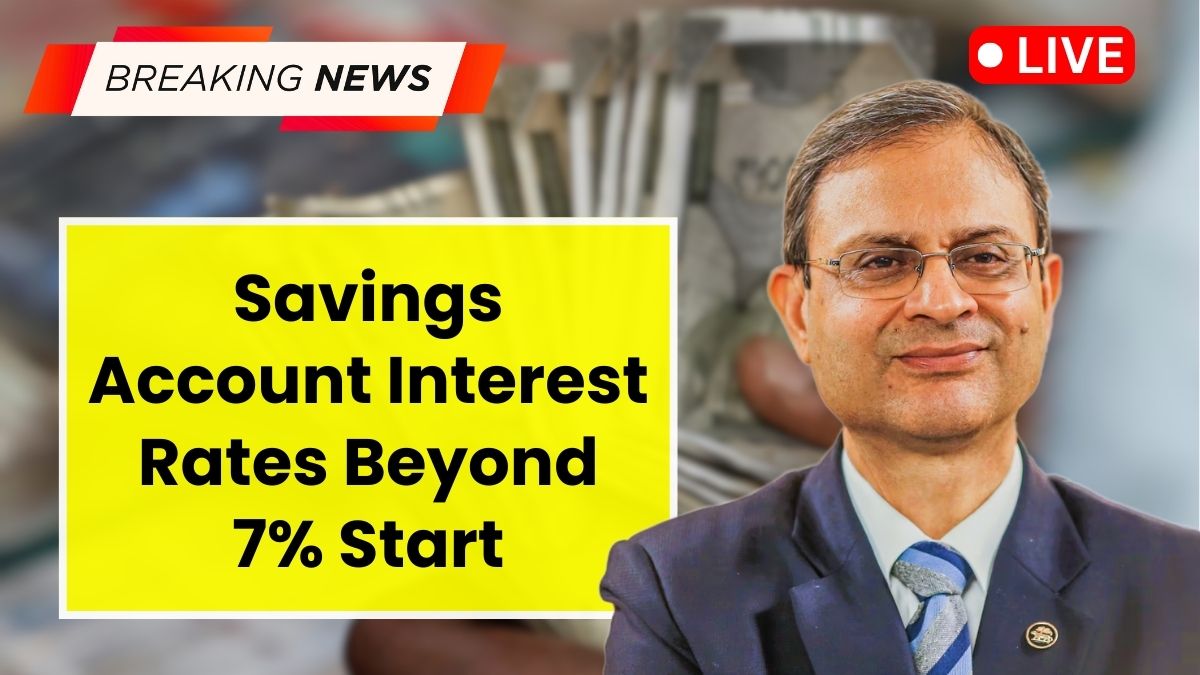
Savings Account Interest Rates : The Reserve Bank of India (RBI) has recently made a decision that could bring relief to millions of savings account holders across the country. For years, account holders have struggled with low interest rates on their savings, often receiving only 2.5 to 4 percent from major banks. However, recent signals from RBI regarding liquidity management, repo rate adjustments, and funding costs have prompted banks to reconsider their interest rates. Experts believe this could push savings account interest rates beyond 7 percent, particularly among small finance banks and digital banks, which are already offering 6 to 7 percent interest in some cases.
Direct Impact of RBI’s Policy on Banks
Monetary policy decisions from RBI directly influence banks’ funding costs and operational strategies. When the central bank adjusts interest rates or manages liquidity in the system, it affects how much banks pay to borrow or raise funds. With RBI signaling a balanced approach to inflation while maintaining sufficient liquidity in the economy, banks are likely to compete for deposits to ensure ample funding. One of the easiest ways for banks to attract deposits is by increasing interest rates on savings and fixed deposits. If competition intensifies, experts say savings account rates above 7 percent may become achievable in the near future.
Is 7% Savings Account Interest Realistic?
While the prospect of earning over 7 percent on a savings account is appealing, it may not apply universally across all banks immediately. Currently, such rates are mostly offered by small finance banks or select digital banks, often with specific terms and conditions. Larger government and private sector banks are adopting a more cautious approach. They are likely to raise rates gradually once monetary policies stabilize and long-term planning becomes predictable. Therefore, while the possibility exists, account holders should manage expectations and carefully review bank offerings before making decisions.

Strategy for Savings Account Holders
In the current evolving scenario, it is wise for account holders not to rely solely on a single bank. Comparing interest rates, terms, and conditions across multiple banks can help maximize returns. It is also important to review minimum balance requirements, withdrawal rules, and security measures when considering accounts offering higher interest. Instead of keeping all funds in a savings account, a balanced approach might include allocating a portion to fixed deposits or other safe investment options to earn higher returns while maintaining liquidity. Patience is key, as interest rate changes following RBI policy decisions may occur gradually.
Future Outlook for Interest Rates
Looking ahead, the trajectory of savings account interest rates will depend on factors such as inflation, domestic economic conditions, and global market trends. If the economy remains strong and banks see steady credit demand, interest rates on deposits could continue to be attractive. While 7 percent or more may not become standard across all banks immediately, it signals a positive trend where banks may introduce competitive offerings to attract customers. For account holders, staying informed and strategically managing funds could help benefit from these developments in the long run.
Disclaimer

This article is for informational purposes only and reflects RBI policies and banking trends as of January 2026. Interest rates, bank offerings, and policy decisions may change over time. Readers should verify details directly with their banks or the official RBI website before making any financial decisions. This information does not constitute financial advice, and account holders are encouraged to evaluate risk and suitability before making changes to their savings strategies.